
When the shoulder joint begins to stiffen and ache, it can dramatically impact a person’s quality of life. Patients often ask, “What is the main cause of frozen shoulder?” For many, the cause remains a mystery, which is why the condition is often classified as “idiopathic.” However, we understand the underlying process and the risk factors that make some individuals more susceptible than others. In this post, we’ll explore the mechanics of frozen shoulder, detail the known risk factors, and explain the typical progression of the condition.
Key Takeaways
- For many individuals, frozen shoulder is classified as idiopathic adhesive capsulitis, meaning it develops without a clear, identifiable trigger.
- Regardless of the trigger, the condition is caused by the shoulder joint capsule thickening, tightening, and forming scar tissue (adhesions). This process restricts movement.
- Risk factors include conditions such as diabetes or thyroid disorders, as well as periods of prolonged shoulder immobility.
- Frozen shoulder typically progresses through three distinct stages (freezing, frozen, and thawing).
The Core Question: What is the Main Cause of Frozen Shoulder?
Frozen shoulder begins with inflammation inside the shoulder joint capsule, the thin, flexible tissue that surrounds the ball-and-socket joint. As this inflammation continues, the capsule may gradually become thicker, tighter, and less elastic. Scar tissue (called adhesions) forms within the capsule, and the available space inside the joint becomes smaller. These changes limit how far the shoulder can move, especially in motions like reaching behind the back or rotating the arm outward.
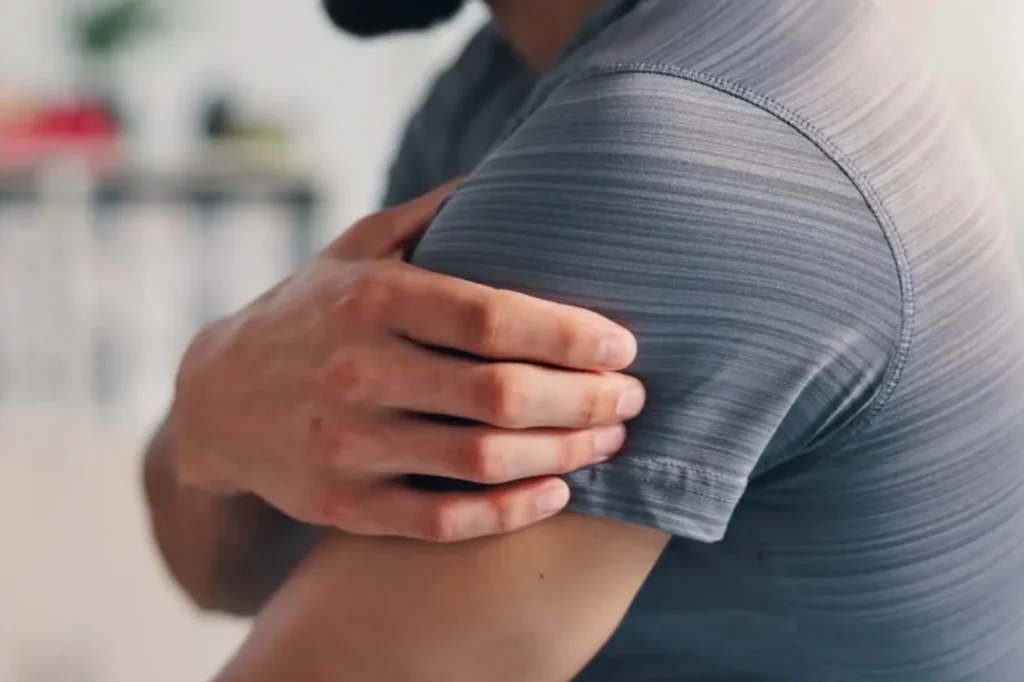
To truly answer the question, “What is the main cause of frozen shoulder?”, we can explore the triggers and understand the two main classifications of the condition: primary and secondary.
Primary (Idiopathic) Frozen Shoulder
The term “idiopathic” means that the cause is unknown. However, there are known risk factors, which we’ll detail later in the post. When a patient develops frozen shoulder without any preceding injury, trauma, or clear external event, we may call it primary adhesive capsulitis. It often begins subtly, with a gradual onset of pain and stiffness that worsens over weeks or months.
Secondary Frozen Shoulder
Secondary adhesive capsulitis has a more obvious trigger. It develops after a known event that affects the shoulder. This event is usually something that causes the shoulder to be immobilized or used less frequently for a period of time.
Common causes of secondary frozen shoulder include:
- Trauma or Injury: A fall or direct blow to the shoulder can lead to a period of reduced movement.
- Surgery: Post-operative immobilization, especially after shoulder or chest surgery, can trigger the condition.
- Rotator Cuff Tears: The pain from a rotator cuff injury may cause a person to avoid moving their arm. This prolonged lack of motion can lead to the capsule tightening.
- Fractures: Wearing a sling or cast after a broken arm or shoulder bone is a risk factor.
The lack of movement creates an environment where the joint capsule may contract and form adhesions. The body’s natural healing response, when combined with stillness, seems to overreact. This overreaction leads to the characteristic stiffness of frozen shoulder.
The Stages of Frozen Shoulder
Frozen shoulder follows a relatively predictable course. It typically progresses through three distinct phases: freezing, frozen, and thawing.
Stage 1: The Freezing Stage (Painful Phase)
This initial stage is defined by the gradual onset of pain. The pain is often dull and aching, but it can become sharp with certain movements. As the pain increases, the patient may instinctively start to use the arm less. This reduced movement, combined with the underlying inflammation, may cause the shoulder to slowly lose range of motion. The stiffness is progressive, meaning it gets worse over time. This stage frequently lasts anywhere from two to nine months.
Stage 2: The Frozen Stage (Stiff Phase)
The second stage is generally characterized by a decrease in pain. This might sound like an improvement, but the stiffness reaches its peak during this phase. The shoulder is significantly restricted in its movement. Simple tasks, such as dressing, reaching into a back pocket, or fastening a seatbelt, may become extremely difficult or impossible. This stage can typically last from four to twelve months.
Stage 3: The Thawing Stage (Recovery Phase)
The final stage is the slow return of motion. The shoulder gradually begins to “thaw.” The adhesions and scar tissue within the capsule slowly start to loosen. The range of motion improves, and the pain continues to subside. This is often the longest and most variable stage.
Risk Factors: Who is Most Susceptible?
Risk factors may not directly cause the condition, but they can increase an individual’s susceptibility to developing it.
Systemic Diseases: The Metabolic Connection
Systemic conditions affect the entire body, suggesting a metabolic or inflammatory link to the development of frozen shoulder.
Diabetes Mellitus
Individuals with diabetes are generally more likely to develop frozen shoulder than the general population. The exact reason for this link is not fully understood. One theory suggests that high blood sugar levels cause glucose molecules to attach to collagen fibers in the shoulder capsule. This process, called glycosylation, makes the collagen stiffer and more prone to forming cross-links, which leads to the thickening and contraction seen in adhesive capsulitis.
Thyroid Disorders
Both an overactive thyroid (hyperthyroidism) and an underactive thyroid (hypothyroidism) are associated with an increased risk of frozen shoulder. The thyroid gland plays a key role in regulating metabolism and connective tissue health. A disruption in thyroid hormone levels may affect the normal turnover and structure of the collagen within the shoulder capsule.
Other Associated Conditions
Other systemic conditions that may increase the risk include:
- Cardiovascular Disease: Patients with heart disease, particularly those who have had a heart attack, show a higher incidence of frozen shoulder.
- Parkinson’s Disease: The neurological changes and associated immobility in Parkinson’s disease may contribute to the development of adhesive capsulitis.
- Autoimmune Conditions: While less direct, some autoimmune disorders may predispose individuals to the inflammatory component of frozen shoulder.
Demographic and Lifestyle Factors
Beyond systemic diseases, certain demographic factors also play a role in determining who develops frozen shoulder.
Age and Sex
Frozen shoulder most commonly affects people between the ages of 40 and 60. It is relatively rare in individuals under 40. Women are also more likely to develop the condition than men. Hormonal changes, particularly those associated with menopause, may play a role in the increased prevalence among women in this age group.
Previous Immobility
Any event that leads to prolonged immobility is a risk factor. If you have a shoulder injury, fracture, or surgery, it is important to discuss a safe, early range-of-motion program with your orthopedic specialist or physical therapist to prevent stiffness.
Treatment Strategies: Managing the Stages
The treatment approach for frozen shoulder is highly dependent on the stage of the condition. An experienced shoulder specialist can evaluate the condition and help guide an appropriate treatment plan. The primary goals are always to manage pain and preserve or restore range of motion.
Non-Surgical Management
1. Pain Management
During the painful “freezing” stage, controlling inflammation and pain can be important.
- Nonsteroidal Anti-Inflammatory Drugs (NSAIDs): Over-the-counter or prescription NSAIDs may help reduce pain and inflammation.
- Corticosteroid Injections: An injection of a corticosteroid directly into the shoulder joint can be effective in reducing pain and inflammation, especially in the early stages. However, the effects are temporary.
2. Physical Therapy (PT)
The type of therapy may change depending on the stage.
- Freezing Stage: Therapy is gentle and focuses on maintaining existing motion without causing excessive pain. Aggressive stretching during this stage may sometimes worsen the inflammation. The focus is on pain control and gentle, passive range-of-motion exercises.
- Frozen and Thawing Stages: As the pain subsides, the focus may shift to more intense stretching and strengthening. The goal is to break up the adhesions and restore flexibility. This phase requires dedication and consistency from the patient.
Surgical Management
Surgery may be recommended for patients who have not responded to a prolonged course of non-surgical treatment.
1. Manipulation Under Anesthesia (MUA)
In this procedure, the patient is put under general anesthesia. Once the patient is fully relaxed, the surgeon gently but firmly moves the shoulder joint. The force of the movement breaks up the adhesions and scar tissue within the capsule.
2. Arthroscopic Capsular Release
This is a minimally invasive procedure performed through small incisions using an arthroscope (a tiny camera). The surgeon uses small instruments to carefully cut and release the tight, scarred portions of the joint capsule. This procedure physically frees the joint.
Prevention: Taking Control of Your Shoulder Health
While some cases of frozen shoulder may not be preventable, there are steps you can take to help reduce your risk.
Early Motion After Injury or Surgery
If you have a shoulder injury, fracture, or surgery, talk to your doctor about starting a safe, early range-of-motion program. Even gentle, controlled movements may help prevent the joint capsule from tightening. A balance between rest and controlled movement is key.
Managing Systemic Conditions
If you have diabetes or a thyroid disorder, management of your underlying condition is a method to reduce your risk. Regular check-ups and adherence to your treatment plan for any systemic disease are possible steps in preventative care.
Lifestyle and Exercise
Maintaining a regular exercise routine that includes gentle stretching and strengthening of the shoulder joint can promote overall joint health. Activities like yoga, swimming, or simple daily stretches can help maintain the flexibility of the shoulder capsule.
Summary
Frozen shoulder can be a challenging condition, especially when the pain and stiffness affect daily activities. While many cases develop without a clear cause, the underlying process is consistent: inflammation within the shoulder capsule followed by progressive tightening and scar tissue formation. Understanding this sequence, along with factors that increase risk, such as diabetes, thyroid disorders, or periods of immobility, can help patients recognize the condition early and seek appropriate care.
Frequently Asked Questions
Is surgery necessary for frozen shoulder?
Many frozen shoulder cases resolve successfully with non-surgical treatments, including pain management and physical therapy. Surgery, such as arthroscopic capsular release, is generally reserved for patients whose symptoms are severe and persistent.
What is the difference between frozen shoulder and shoulder arthritis?
Shoulder arthritis (osteoarthritis) is the breakdown of the cartilage that cushions the ends of the bones in the joint. This can cause bone-on-bone friction, pain, and stiffness. Frozen shoulder, on the other hand, is a problem with the joint capsule, which thickens and contracts. The cartilage and bone surfaces are usually normal.
Why is external rotation often the most limited movement?
In many cases, external rotation, which is the movement of rotating your arm away from your body, can be the first and most severely limited movement in frozen shoulder. This is due to the specific anatomy of the shoulder capsule. The thickening and contraction of the capsule, particularly the coracohumeral ligament and the rotator interval, mechanically block this movement more than others.