
Medically reviewed by Eric L. Giang, DO | Reviewed June 2026
When pain returns after a shoulder procedure, or motion never quite comes back, the next step is figuring out why, along with whether revision shoulder surgery is the right answer. When I see this in my Modesto practice, what I always tell patients is this: revision surgery is more involved than the initial procedure. That’s not meant to discourage anyone. It’s just the honest reality of working in a joint that has already been operated on. The anatomy looks different. There may be scar tissue. There may be bone loss. As a fellowship-trained shoulder surgeon, I’ve dedicated my practice to these kinds of complex cases, and I want patients to walk into this process fully informed.
Key Takeaways
- Revision shoulder surgery aims to correct complications from a prior shoulder procedure, including pain, instability, and implant failure.
- The most common reasons patients need revision surgery are glenoid loosening, implant wear, infection, and persistent instability after a primary repair or replacement.
- Revision surgery is technically more demanding than primary surgery, which is why seeing a surgeon with specific fellowship training in shoulder procedures matters.
- Not every shoulder problem requires revision surgery. A thorough evaluation will help determine whether revision is the right path or whether a non-surgical approach may help first.
What Is Revision Shoulder Surgery?
Revision surgery refers to any procedure that corrects, replaces, or addresses complications from a previous shoulder operation. That previous operation could have been a total shoulder replacement, a reverse shoulder replacement, a rotator cuff repair, or another form of shoulder surgery.
The term “revision” covers a fairly wide range of interventions. In some cases, the surgery involves exchanging a loose or worn implant component. In others, it means addressing an infection, repairing tissue that broke down around the implant, or stabilizing a joint that has become unstable. The common thread is that something from the original procedure needs to be corrected.
Shoulder revision is generally a more complex undertaking than primary shoulder surgery. The tissues have already healed and been disrupted once. There may be bone loss where the original implant was seated. Scar tissue can limit visibility and complicate the approach. For this reason, I recommend seeing a specialist who focuses on the upper extremity rather than a general orthopedic surgeon.
Why Patients Need Revision Shoulder Surgery
There are several reasons a patient might need revision shoulder surgery. Some causes develop naturally over time. Others arise from factors unique to a patient’s anatomy or healing process.
Glenoid Component Loosening
After a total shoulder replacement, the glenoid component (the socket side of the implant) can gradually loosen from the underlying bone. This is one of the most common reasons patients need revision after a total shoulder arthroplasty. As the implant shifts, patients may experience a return of pain, clicking, or loss of function. Advances in implant design are actively working to reduce this risk, but loosening remains one of the primary drivers of revision in shoulder replacement patients.
Implant Wear or Fracture
Over years of use, implant components can wear down or, in some cases, fracture. This is more likely in younger, more active patients who place higher demands on their shoulder. When significant wear occurs, the joint may become unstable or painful, and the damaged component may need to be exchanged.
Infection
Infection after shoulder surgery can develop shortly after the procedure or years later. One organism in particular, Cutibacterium acnes, is associated with delayed, low-grade infections in shoulder replacement patients. Treating a shoulder infection may require removing the implant, clearing the infection with antibiotics, and then performing a second surgery to implant a new prosthesis once the infection has cleared.
Instability
Some patients develop shoulder instability after a replacement or repair, meaning the joint moves in ways it shouldn’t. This can result from soft tissue imbalance, component malposition, or problems with how the original repair healed. Instability can cause significant functional limitations and, depending on severity, may require surgical correction.
Failed Rotator Cuff Repair
Not all revision shoulder surgeries involve joint replacement. Some patients have had a prior rotator cuff repair that did not heal as expected or retracted over time. In these cases, revision surgery may involve re-repairing the tendon, converting to a reverse shoulder replacement (which does not rely on an intact rotator cuff to function), or addressing associated problems like arthritis that developed after the failed repair.
What I See in My Patients
In my practice here in Modesto, I’ve noticed a pattern with revision shoulder patients that I think is worth talking about. Many of them waited longer than they should have to seek a second opinion. They assumed the pain and loss of motion they were experiencing was just part of recovering, or they were hopeful it would resolve on its own.
Some of them are right. Shoulder recovery can take time, and what feels like a setback early in rehab may not be. But when pain returns after a period of improvement, or when motion suddenly decreases months after surgery, that’s a signal worth looking at. I’d rather see a patient early and tell them everything looks fine than have them wait a year and then discover a problem that would have been simpler to address sooner.
The other thing I see frequently is patients who had their primary shoulder surgery done by someone without specific shoulder training. Shoulder replacement surgery is performed far less often than hip or knee replacement. When complications occur, finding a surgeon with true shoulder subspecialty training can make a meaningful difference in the outcome.
Fellowship training in the shoulder and elbow, like the training I completed at the Carrell Clinic in Dallas, involves focused exposure to complex cases that most general orthopedic training programs don’t provide. That experience matters when the anatomy inside a shoulder doesn’t look the way a textbook expects it to.
My Approach to Revision Shoulder Surgery
When a patient comes to me with a prior shoulder surgery that isn’t working, my first goal is to understand exactly why. That means a thorough clinical evaluation combined with imaging.
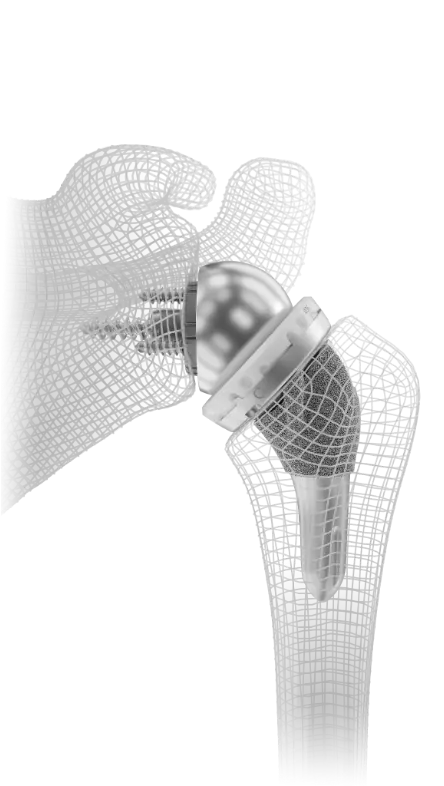
Once I have a clear picture of what’s going on, I build the surgical plan around that specific patient. For a patient with a loose glenoid component, I need to understand how much bone stock remains and what options I have for anchoring a new implant. For a patient with a failed rotator cuff and secondary arthritis, I may be considering a reverse shoulder replacement, which transfers the mechanical work from the rotator cuff to the deltoid muscle.
After surgery, patients can generally expect to wear a splint or brace for up to 6 weeks, with physical therapy prescribed to help restore strength and range of motion. The overall recovery timeline depends on how extensive the revision work was and the patient’s overall health going in.
Summary
Revision shoulder surgery is a specialized procedure that addresses complications from a prior shoulder operation, whether that’s a failed replacement, an implant that has loosened or worn over time, an infection, or persistent instability. It’s more complex than primary surgery, and it requires a surgeon with focused training and experience in the shoulder.
If you’re in the Modesto area or the broader Central Valley and you’re dealing with pain or functional problems after a previous shoulder procedure, I’d encourage you to schedule a consultation rather than continuing to wait it out. Early evaluation gives us the most options. Contact my office directly at (209) 577-1411 or schedule online.
Frequently Asked Questions
How long is recovery after revision shoulder surgery?
Recovery after revision shoulder surgery typically includes wearing a splint or brace for up to 6 weeks, followed by a course of physical therapy to rebuild strength and restore range of motion. The full recovery timeline varies depending on the extent of the revision and the patient’s overall health. Some patients notice meaningful improvement within a few months; full recovery may take longer.
Can a failed rotator cuff repair be corrected with revision surgery?
Often, yes. When a rotator cuff repair doesn’t heal or re-tears, revision surgery may involve re-repairing the tendon directly or, if there is significant associated arthritis or the cuff is not repairable, converting to a reverse shoulder replacement. The right approach depends on the condition of the tendon, the degree of arthritis, and the patient’s functional goals.
Do I need to see a specialist for revision shoulder surgery?
Revision shoulder surgery is generally considered more complex than primary surgery, and seeing a surgeon with fellowship training in shoulder and elbow procedures is strongly advisable. The shoulder is a specialized joint, and surgeons with focused training in this area tend to have more experience managing the complications and anatomic challenges that revision cases present.