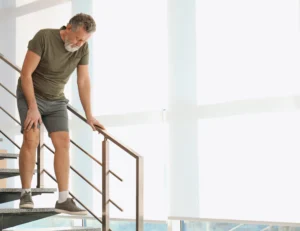
If you’ve ever experienced persistent pain around your kneecap after a run, you might be dealing with runner’s knee. This condition, medically known as patellofemoral pain syndrome, is often caused by overuse, direct trauma, anatomical issues, and muscle imbalances. In this post, we break down what causes runner’s knee, its symptoms, and how to prevent it.
Key Takeaways
- Runner’s knee may result from trauma, overuse, anatomical issues, or muscle imbalances.
- Symptoms include pain around the kneecap that worsens with activity, sometimes accompanied by swelling, stiffness, or clicking sounds.
- Preventative strategies include gradually increasing training intensity, wearing supportive footwear, and performing targeted strengthening exercises.
Understanding Runner’s Knee
Runner’s knee, medically known as patellofemoral pain syndrome, is characterized by pain at the front of the knee around the kneecap. This condition is common among runners, hence the name, but it can also affect anyone who engages in activities that put repeated stress on the knee joint.
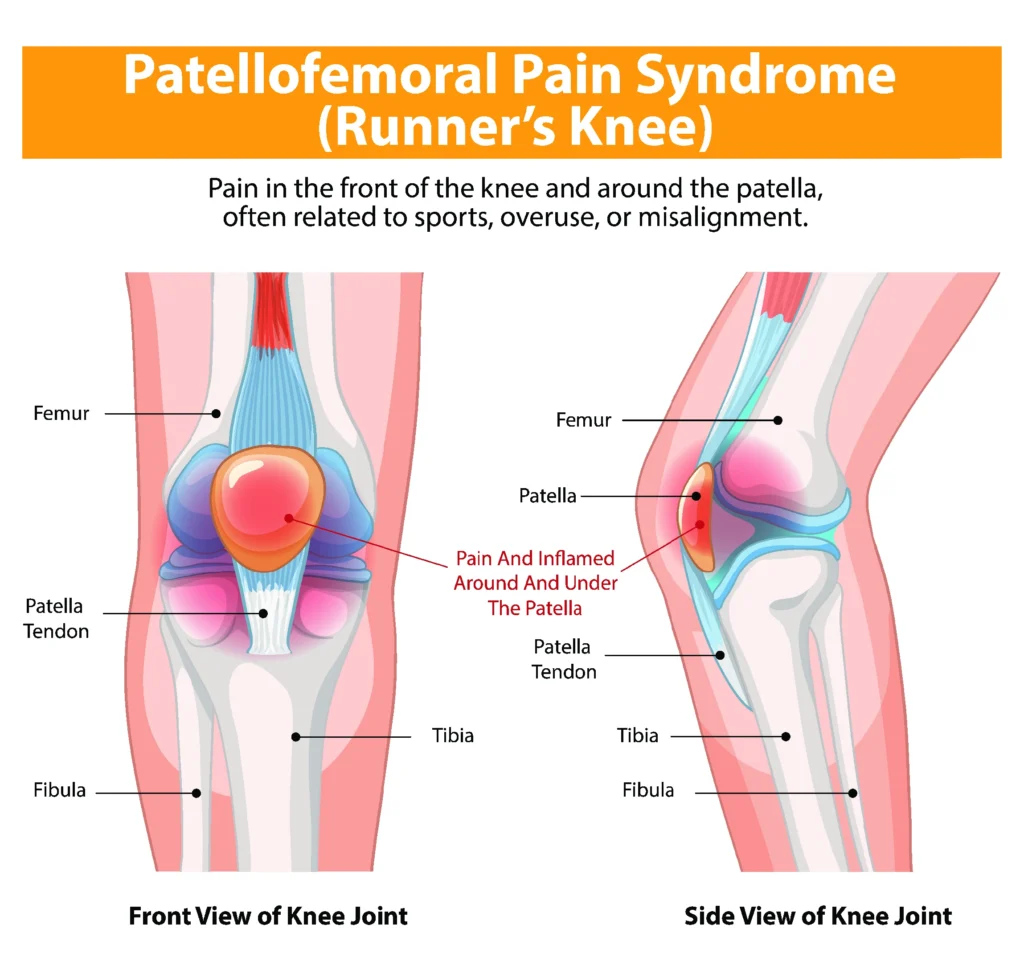
The pain from runner’s knee can be debilitating, impacting daily activities. It usually begins as mild discomfort and can worsen without proper intervention. Early symptom recognition and understanding the causes are important for management and prevention.
Primary Causes of Runner’s Knee
Runner’s knee can stem from several contributing factors. One possible cause is direct trauma to the knee, such as a hit or fall, which can lead to immediate pain and inflammation. However, not all cases of runner’s knee result from a single incident.
Overuse from repetitive activities like running, hiking, and weightlifting can also lead to this condition by irritating the tissues around the kneecap. Training errors, such as increasing the intensity or duration of your workouts too quickly, can put extra stress on the knee. Additionally, poor footwear that doesn’t provide adequate support can exacerbate the problem.
In the following subsections, we’ll take a closer look at some of the contributing factors for runner’s knee.
Overuse and Repeated Stress
One of the primary culprits behind runner’s knee is overuse. Engaging in high-stress activities like running or squatting can lead to repeated stress on the knee joint, irritating the tissues around the kneecap. This repeated stress can cause aching pain and discomfort, which often worsens with continued activity.
To help mitigate this risk, it’s important to allow for proper rest and recovery. Additionally, incorporating strengthening exercises can help improve the resilience of surrounding muscles.
Anatomical Factors
Certain anatomical characteristics can predispose individuals to runner’s knee. For instance, hypermobile feet, in which the joints move more than they should, can lead to instability and extra stress on the knee. Similarly, malalignment of the bones from the hips to the ankles can create uneven pressure distribution on the knee. Structural issues such as flat feet or leg length discrepancies may also contribute to pain.
During a physical examination, a doctor can assess these anatomical factors and guide appropriate strategies to help alleviate pain and improve knee function.
Muscle Imbalances
Muscle imbalances, particularly between the hip and thigh muscles, are another common cause of runner’s knee. When these muscles aren’t equally strong, the kneecap may move out of alignment during activities. Weak hip muscles are especially prone to causing this misalignment.
Strengthening exercises targeted at these areas can help maintain proper kneecap positioning and reduce the risk of injury.
Risk Factors for Developing Runner’s Knee
Certain groups are more susceptible to developing runner’s knee:
- Young adults and teenagers, due to high activity levels and growth spurts
- Athletes, especially those in high-impact or repetitive sports like running or jumping
- Women, who may have anatomical differences (such as a wider pelvis) that affect knee alignment
- Individuals with anatomical conditions such as flat feet or leg length discrepancies
Understanding your personal risk factors can help guide prevention efforts.
Recognizing Symptoms of Runner’s Knee
The most common symptom of runner’s knee is pain around the kneecap, which usually starts as a mild, dull, and aching sensation. This pain often worsens with activities that put pressure on the knee, such as walking up or down stairs, kneeling, or sitting with the knees bent for extended periods.
Swelling and tenderness along the inner edge of the kneecap are also possible symptoms. Some individuals may experience clicking or popping noises when moving the knee.
If left untreated, symptoms may persist and worsen. Prompt attention to these signs can help prevent long-term discomfort and guide effective treatment.
Diagnosing Runner’s Knee
Diagnosis involves a comprehensive assessment of the patient’s medical history and a physical examination. During the physical exam, the doctor will evaluate knee stability and range of motion, and identify any swelling or tenderness.
Imaging tests such as X-rays and magnetic resonance imaging (MRI) are often used to further assess the knee joint and rule out other potential causes of knee pain. X-rays are typically the first line of evaluation, providing a detailed view of the knee’s structure and helping to identify any abnormalities that may be contributing to the pain. MRIs provide a detailed view of soft tissues.
Effective Treatment Options
Treating runner’s knee effectively requires a multi-step approach. Non-surgical treatments are usually the first approach and may include:
- Rest to allow healing and prevent further irritation
- Activity modification to reduce stress on the knee
- Ice therapy to manage inflammation
- Physical therapy to strengthen the thigh and hip muscles
- Medications for pain relief
- Supportive devices, such as braces or taping
In severe cases of patellofemoral pain syndrome, surgical intervention may be recommended. These procedures are typically considered when non-surgical treatments do not yield improvement.
An experienced knee specialist can evaluate the injury, discuss potential risks and benefits, and help guide the right treatment path.
Preventing Runner’s Knee
Preventative strategies to minimize the risk of runner’s knee include:
- Gradually increasing training intensity
- Wearing well-fitted, supportive shoes
- Using proper technique during exercise
- Strengthening thigh and hip muscles
Additional support, such as shoe inserts, may also help with alignment and stability. A consistent routine of strengthening and mobility work can lower the risk of developing knee pain.
Summary
Understanding the causes, symptoms, and treatment options for runner’s knee can help individuals prevent long-term complications. Recognizing the early signs of knee pain and taking proactive measures can prevent the condition from worsening. Incorporating proper training techniques, wearing supportive footwear, and performing strengthening exercises can reduce the risk of developing runner’s knee. With the right approach, many people can return to their regular activity level and continue enjoying physical activities without chronic knee pain.
Frequently Asked Questions
What is runner’s knee?
Runner’s knee, or patellofemoral pain syndrome, is a condition marked by pain in the front of the knee around the kneecap. It often arises from traumatic injury, overuse, or improper alignment during physical activity.
What causes runner’s knee?
Runner’s knee is primarily caused by overuse, direct trauma, anatomical factors, and muscle imbalances. Addressing these issues early on can help prevent further injury.
Who is at risk of developing runner’s knee?
Individuals at risk for runner’s knee include young adults, athletes, and those with anatomical issues such as flat feet or leg length discrepancies. It’s important for these groups to pay attention to their knee health.
How is runner’s knee diagnosed?
Runner’s knee is typically diagnosed through a review of your medical history, a physical examination, and imaging tests such as X-rays and MRIs to assess any underlying issues.
What are the treatment options for runner’s knee?
Effective treatment options for runner’s knee include rest, physical therapy, lifestyle modifications, and pain-relieving medications, while surgical intervention may be considered in severe cases.